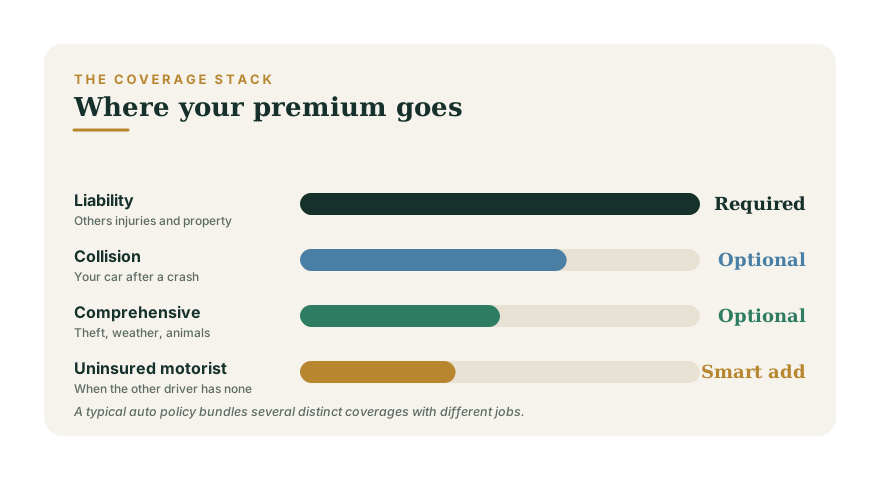
Auto insurance is not one thing. It is a bundle of separate coverages, each protecting against a different risk, and you can adjust most of them independently. Understanding the parts lets you buy the protection you need without paying for what you do not.
Liability: the non-negotiable part
Liability coverage pays for injuries and property damage you cause to others. It is legally required almost everywhere, but state minimums are often dangerously low. A serious accident can generate medical bills well past a small limit, and anything above it comes out of your pocket. Carry meaningfully more than the minimum; the extra coverage is usually cheap relative to the risk it removes.
Collision and comprehensive
These two cover your own vehicle:
- Collision pays to repair or replace your car after a crash, regardless of fault.
- Comprehensive covers non-collision losses such as theft, fire, hail, falling objects, and hitting an animal.
Both are optional unless a lender requires them on a financed car. They make sense when your vehicle is worth enough that replacing it would hurt.
Uninsured and underinsured motorist
A meaningful share of drivers carry no insurance or too little. Uninsured and underinsured motorist coverage steps in when the at-fault driver cannot pay for the injuries or damage they caused you. It is inexpensive and frequently overlooked, yet it is exactly what protects you from someone else's bad decision.
Choosing your deductible
Your deductible is what you pay before collision or comprehensive coverage kicks in. A higher deductible lowers your premium but raises your out-of-pocket cost after a claim. Pick the highest deductible you could comfortably cover from your emergency fund without strain; that captures most of the premium savings while keeping a real claim manageable. The same logic applies across your policies, as we explain in how to choose your home insurance deductible.
When to drop collision on an old car
As a car ages, its value falls but your collision and comprehensive premiums often do not fall as fast. At some point you are paying to insure a car worth very little. A common rule of thumb: when your annual premium for collision and comprehensive approaches roughly ten percent of the car's value, dropping those coverages and self-insuring usually makes sense. Keep liability and uninsured motorist no matter what, because those protect against costs far larger than the car itself.
Gap insurance
If you finance or lease a new car, you can owe more than it is worth in the first few years. Gap insurance covers the difference between what you owe and what the car is worth if it is totaled or stolen. It matters most with small down payments and long loan terms, and you can drop it once your loan balance falls below the car's value. To weigh how auto coverage fits your broader protection, run the insurance calculator.