The phrase "estate planning" sounds like something for people with estates — sprawling properties, trust funds, and tax attorneys on retainer. That framing keeps millions of ordinary adults from doing the most basic protective paperwork of their lives.
The truth is simpler and more urgent. Estate planning is just deciding, in advance and in writing, who makes decisions and who gets what if you become incapacitated or die. Everyone with a bank account, a car, a child, or a pulse benefits from it.
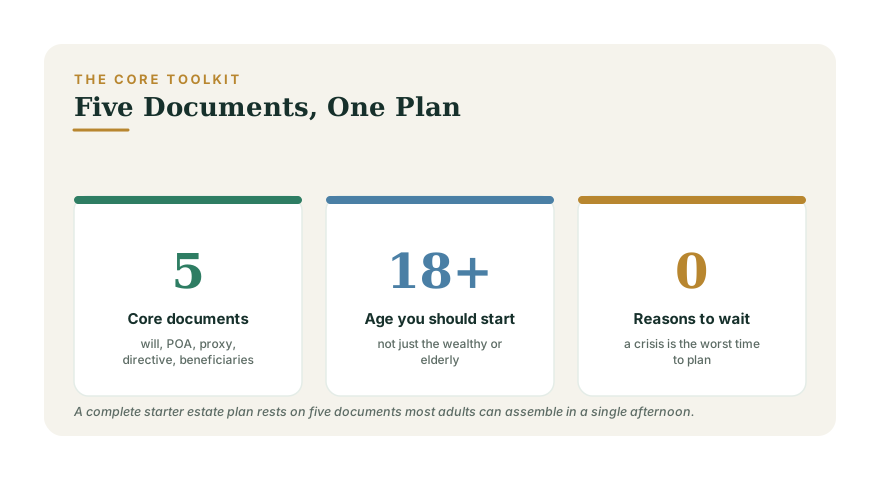
Here are the five documents that form a complete starter plan, what each one does, and why skipping any of them hands control of your life to a probate judge or a hospital ethics committee.
1. A Last Will and Testament
Your will names who inherits the property that does not already pass automatically, and just as importantly, it names a guardian for any minor children. If you die without a will, your state's intestacy laws decide who gets your assets — and a court decides who raises your kids. That outcome rarely matches what you would have chosen.
A will is also where you name an executor, the person responsible for paying final bills and distributing what remains. Choose someone organized, trustworthy, and willing to do the work. A will does not avoid probate, but it gives the probate court clear instructions instead of forcing it to guess.
2. A Durable Power of Attorney
This is the most overlooked document on the list and arguably the most important while you are alive. A durable financial power of attorney authorizes someone you trust to manage your money — pay your mortgage, file your taxes, access your accounts — if you become unable to do it yourself.
Without one, your family cannot simply step in. They have to petition a court for a conservatorship, an expensive, slow, and public process that strips you of legal authority. "Durable" means the authority survives your incapacity, which is precisely the moment you need it.
3. A Healthcare Proxy and Living Will
A healthcare proxy (sometimes called a medical power of attorney) names the person who makes medical decisions for you when you cannot. A living will, or advance directive, spells out your wishes about life-sustaining treatment so your proxy is not left guessing during the worst week of their life.
- Healthcare proxy. Names the decision-maker.
- Living will. States the decisions — ventilators, feeding tubes, comfort care.
- HIPAA authorization. Lets your proxy actually see your medical records.
4. Beneficiary Designations
Your retirement accounts, life insurance, and many bank accounts pass directly to whoever is named on the beneficiary form — completely outside your will. People forget this constantly. An ex-spouse listed on a 401(k) from a decade ago will inherit it, no matter what your will says. Review every form after any major life event and name a contingent beneficiary too.
5. A Revocable Living Trust (For Some)
Not everyone needs a trust, but many people benefit from one. A revocable living trust holds your assets during your life and passes them to your heirs without probate — privately and often faster than a will alone. It is especially useful if you own real estate in more than one state or want to control how and when heirs receive money.
Why Young and "Not Wealthy" People Still Need This
A twenty-five-year-old with no children and a modest checking account still has a body that can end up in a hospital bed and a parent who would be locked out of decisions without a proxy. A new parent needs a guardian named more than they need anything else on this list. The documents that matter most in a crisis — the power of attorney and the healthcare directives — have nothing to do with how rich you are.
Start with the two incapacity documents, then add the will, then revisit the rest as your life grows more complex. You can run a quick gap check on the rest of your finances with our free tools, and read more in our library before you sit down to draft anything.