There is a simple reason some advisors seem so busy on your behalf, calling with new ideas and reshuffling your holdings every few months: when an advisor earns a commission on every trade, the trade is how they get paid. Their incentive is activity, not results. Taken to its extreme, this becomes churning - trading an account excessively to generate commissions - and it is one of the oldest ways the industry quietly transfers your money into someone else's paycheck.
What makes churning dangerous is that it can look like diligence. Frequent activity feels like attentive service. Underneath, it is often just cost.
What Churning Actually Is
Churning is excessive buying and selling in a client's account, primarily to generate commissions for the broker rather than to serve the client's goals. It is illegal - regulators treat it as a serious violation - but it persists because the commission model rewards it. Each trade triggers a commission, so a broker who needs revenue has a built-in reason to keep the account in motion. The trades may even sound reasonable one at a time. The pattern is the problem: turnover that far exceeds anything a sensible long-term strategy would require.
Reverse Churning: The Other Side of the Same Coin
There is a mirror-image abuse that catches people who switched to a fee account thinking they were now safe. Reverse churning happens when an advisor charges an ongoing fee - say 1% a year on assets - for an account they essentially never touch. You are paying for active management and advice, but receiving neither; the money just sits while the fee meter runs. One model overtrades to earn commissions; the other does nothing while billing for activity. Both are paying for motion that does not exist, or exists only to enrich the advisor.
The Math: Activity Loses to Patience
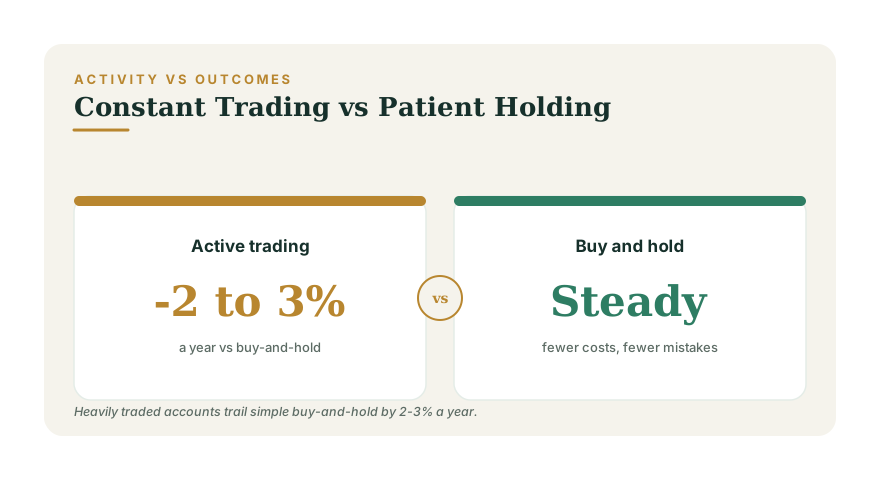
The evidence against frenetic trading is overwhelming and consistent. Studies of individual investor behavior - most famously work showing that the most active traders earn the worst returns - find that heavy trading drags performance by roughly 2-3% per year compared with a simple buy-and-hold approach. The losses come from several sources stacked on top of each other:
- Commissions and spreads. Every trade has a cost, even when "commission-free," via the bid-ask spread. Multiply that across dozens of trades a year and it adds up fast.
- Taxes. Frequent selling in a taxable account realizes short-term gains, which are taxed at your ordinary income rate - far higher than the long-term rate you would pay by simply holding.
- Bad timing. More trading means more chances to sell low, buy high, and chase performance. Activity multiplies the opportunities to make a mistake.
Put numbers on it. A 2.5% annual drag on a $400,000 portfolio is $10,000 a year going up in smoke. Over 20 years at 7% versus 4.5% net, the difference compounds from roughly $1.55 million down to about $965,000 - close to $600,000 lost to churning. That is not a market outcome. It is a fee structure outcome.
How to Spot Churning in Your Own Account
You do not need to be an expert to detect it. Pull your statements and look at the pattern.
- High turnover. If a large share of your holdings is bought and sold within a year, ask why. Long-term portfolios are mostly quiet.
- Lots of small commissions. A steady stream of transaction charges, each modest, that quietly accumulate.
- Trades you do not understand. Selling a fund only to buy a near-identical one, or constant "repositioning" with vague justifications.
- In-and-out of the same names. Buying something, selling it, and buying it again is a classic commission-generating loop.
- A fee account that never changes. The reverse problem: ongoing charges for an account that has not been meaningfully managed in years.
How to Protect Yourself
- Ask your advisor, in writing: how often do you trade my account, and what specifically triggers a trade?
- Ask exactly how each trade pays you - commission, markup, or nothing.
- Request your account's annual turnover rate and total transaction costs for the past year.
- If you pay an ongoing fee, ask what you are receiving for it - and whether a lower-touch arrangement would serve you better.
- If the answers are vague or the activity does not match a clear strategy, take your records and consider moving on. Excessive trading is reportable to regulators.
The Honest Recommendation
Good long-term investing is mostly inaction. A sensible portfolio is built once, rebalanced occasionally, and otherwise left alone to compound. That reality is bad for business if you are paid per trade - which is exactly why the structure matters more than the personality. A fee-only advisor with no commission incentive has no reason to churn, and a low-cost index portfolio or robo-advisor removes the temptation entirely by removing the salesperson from the trade. The boring path is usually the profitable one - for you, not for them.
Curious how much trading costs and taxes are quietly shaving off your returns? Project the long-run difference between a calm, low-cost portfolio and an over-traded one with our wealth simulator at /tools.