You spent years building trust with your financial advisor. You told them about your divorce, your kids, your fear of running out of money in retirement. Then one day you get a letter: your advisor is retiring, and your accounts are now being handled by someone named Brandon you have never met. The relationship you valued was, it turns out, a business asset, and it just changed hands without your meaningful consent.
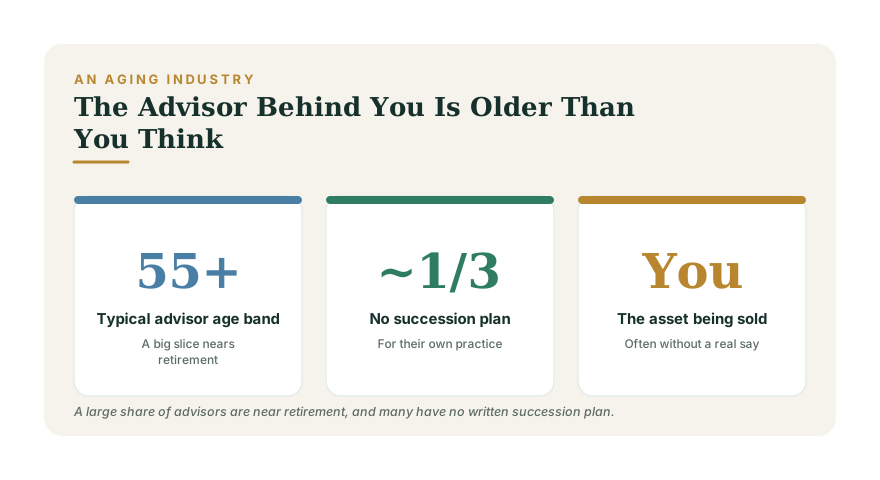
This is one of the least-discussed risks in personal finance, and it is getting worse. The advisory workforce is aging rapidly, a large share is at or near retirement age, and a surprising number have no documented succession plan for their own practice. Your money is exposed to a transition you have never been told to plan for.
The Three Ways This Goes Wrong
You get handed to an inexperienced junior. When a senior advisor winds down, their book of clients often gets distributed to younger associates. Sometimes that junior is excellent. Sometimes they are two years out of training and inheriting hundreds of households overnight. You did not interview them. You did not choose them. You were assigned.
The practice is sold and you are the inventory. Advisory practices are bought and sold constantly, frequently valued at a multiple of recurring revenue. In other words, the price the buyer pays is based largely on the fees you generate. You are, quite literally, the product being sold. The acquiring firm may have different fees, different funds, and a different philosophy, and the deal closes whether or not it suits you.
The advisor simply leaves or dies with no plan. If there is no continuity arrangement, your accounts can land with whoever the firm assigns, or sit in limbo. In the worst case, paperwork stalls right when you need access or guidance most.
Follow the Money
Understand why this happens and you will understand how to protect yourself. An advisor's book of business is their retirement nest egg. They have a powerful financial incentive to maximize the sale price and to keep clients in place during the transition, because client departures lower the value of the deal. That means the transition is often designed around retaining your assets, not around making sure the new advisor is the right fit for you. The continuity you are sold as a benefit is also the seller's payday.
Large firms and aggregators are consolidating the industry, buying up practices to gather assets at scale. Their model depends on clients staying put through ownership changes they never voted on. Inertia is the business plan.
What This Can Cost You
The damage is rarely a single dramatic loss. It is quieter. A new advisor who does not know your situation may rebalance into products that trigger capital gains, miss a planned Roth conversion, overlook a required minimum distribution, or push you into the acquiring firm's higher-fee house funds. A 200,000 dollar portfolio nudged from 0.5 percent to 1.5 percent in all-in costs after an acquisition loses an extra 2,000 dollars a year, every year, compounding silently. Nobody sends you a bill labeled "succession."
There is a relationship cost too. The new advisor inherits a file, not a history. They do not know that you promised to help fund a grandchild's education, that you plan to sell a rental property in three years, or that you panic when the market drops and need a steady voice. Those details, the ones that should drive every decision, often do not survive the handoff. You are left rebuilding trust from zero, this time with someone you did not choose, while paying the same fee you always paid.
How to Protect Yourself
The single most powerful move is to ask the questions before you ever need the answers. A good advisor will have ready replies. Evasiveness is itself the warning.
Questions to Ask Your Advisor Now
- What happens to my accounts if you retire, leave, become disabled, or die? Ask for the written continuity or succession plan, not a verbal reassurance.
- If you sell your practice, do I get a say in who takes over? Find out whether you will be notified before a sale and whether you can decline the new advisor.
- Who, specifically, is your named successor, and can I meet them? A real plan has a named person, not a vague promise that the firm will handle it.
- Will my fees or my fund lineup change after a transition? Get clarity on whether an acquirer could move you into different, costlier products.
- How old are you, and what is your own timeline? It is a fair question. You are entrusting your future to theirs.
- If the firm is acquired, am I free to leave without penalties or surrender charges? Know your exit before you are forced to use it.
An Honest Recommendation
Favor structures that survive any one person leaving. A larger fee-only RIA with a real team and a documented succession plan reduces single-person risk. Better still, the simpler your portfolio, the less a transition can hurt you: a handful of low-cost index funds held at a major custodian needs almost no one to manage it, which means a retiring advisor changes very little. And a low-cost robo-advisor has no human to retire at all. The less your plan depends on one irreplaceable relationship, the safer your money is.
Do not wait for the retirement letter. Send your advisor the questions above this week, and document the answers. If you want to stress-test how independent your finances are from any single advisor, map your full picture in your plan and check the cost assumptions with our free tools. Continuity should protect you, not just the sale price of someone's book.