When your claim gets denied, the natural reaction is to assume the insurer looked carefully, found a real problem, and made a final decision. Often none of that is true. A denial is frequently the first move in a process designed to see whether you will simply walk away. The uncomfortable reality is that for many lines of insurance, appealing works, and a meaningful share of denials are reversed once the policyholder pushes back with the right paperwork.
The honest truth: a denial is not a verdict
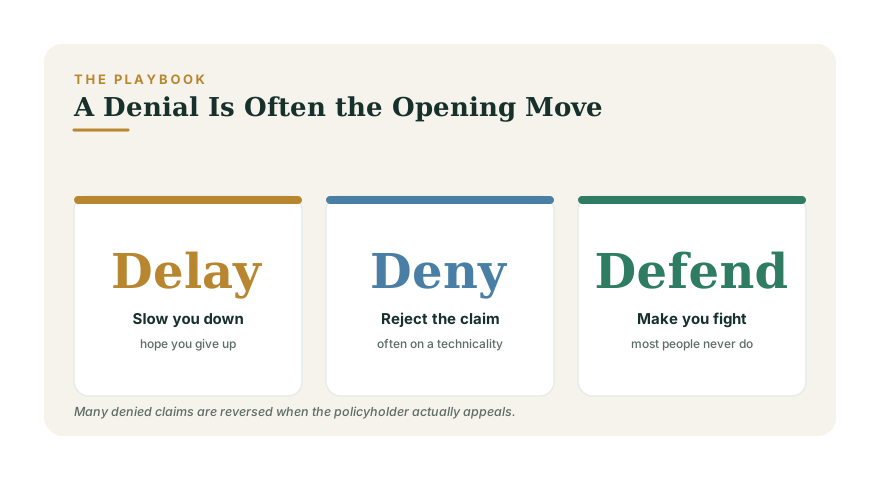
An insurance company makes money on premiums and loses money on claims. That is not a conspiracy theory, it is just the business model, and it creates a permanent incentive to pay out as little as the contract and the law allow. The phrase "delay, deny, defend" has been used to describe how some insurers handle claims: slow the process down, issue a denial that puts the burden back on you, and make any further fight expensive and exhausting. The bet is that most people, especially when sick, grieving, or rebuilding after a disaster, will not have the energy to appeal.
The good news is that the contract still binds them. If your claim is legitimately covered, a denial is a position, not a final ruling, and you have formal rights to challenge it.
Follow the money
Every claim paid is a direct hit to an insurer's results, and adjusters are often measured on the cost of the claims they settle. That does not mean every adjuster is acting in bad faith, but it does mean the system is tilted toward the lowest defensible payout. Initial denials are cheap to issue and frequently never challenged, so they are a profitable default. A surprising number of denials come down to fixable problems: a missing document, a coding error, a service the insurer claims was not "medically necessary," or a deadline you supposedly missed. The insurer knows that each step you have to take is another chance for you to give up.
Common denial tactics, and what they actually mean
- "Not medically necessary." A common health-insurance denial. It usually means a reviewer, sometimes not even in the relevant specialty, disagreed with your doctor. Your doctor's detailed letter of medical necessity is your strongest counter.
- "Pre-existing condition" or "material misrepresentation." The insurer claims you failed to disclose something on your application. Pull your original application and check whether the claim is actually true.
- "Out of network" or "no prior authorization." Often a paperwork failure that can be corrected, especially for emergencies, where many plans must cover care regardless of network.
- "Excluded under the policy." Demand the exact clause in writing. Vague references to "policy terms" are a red flag that the exclusion may not actually apply.
- Lowball property estimates. On home or auto claims, the insurer's adjuster may simply value the damage low. An independent estimate is your counterweight.
The math of giving up
Consider a 9,000 dollar medical claim denied as "not medically necessary." Writing a strong appeal might take you a few hours plus a letter from your doctor. If appeals in your situation succeed even a third of the time, the expected value of those few hours is roughly 3,000 dollars. There is almost no other way to earn that hourly rate by filling out forms. The insurer is counting on you not running that calculation. Run it.
How to fight back, step by step
- Read your actual policy. Not the marketing summary, the full contract. Find the specific coverage and exclusion language. You cannot win an argument about a document you have not read.
- Get the denial in writing with a reason. Insurers must tell you why a claim was denied and which policy provision applies. Demand the specific reason if it is vague.
- Build a paper trail. Keep every letter, log every phone call with the date, the representative's name, and what was said. Follow up verbal conversations with an email summary.
- File a formal internal appeal before the deadline. Most policies give you a fixed window. State plainly that the claim is covered, cite the policy language, and attach your evidence, including a doctor's letter of medical necessity where relevant.
- Escalate to external review. For health plans, you generally have the right to an independent external review by a third party whose decision the insurer must honor. Use it.
- Bring in your state insurance commissioner. Every state has a department that takes consumer complaints about insurers. A complaint there gets an insurer's attention fast, because regulators track patterns of bad-faith behavior.
- For large or bad-faith denials, talk to an attorney. Many work on contingency for serious cases, and the mere involvement of a lawyer often reopens a "final" decision.
The honest recommendation
Never accept a first denial as the end of the story. Read your policy, ask for the denial reason in writing, gather your documentation, and file the formal appeal within the deadline. Most people never take these steps, which is exactly why the tactic works, and exactly why it so often fails when someone does push back. The system is built to reward persistence, so be persistent.
Before you ever need to file, read your policies now so you know what you actually own, and keep an emergency fund mindset toward your coverage. To pressure-test whether your overall protection has gaps that could leave you fighting an uphill claim, work through the tools, the insurance calculator, and your scores.