Bundle your home and auto and save. It is one of the most repeated lines in insurance advertising, and the discount is real. The problem is what the discount is taken off of. A percentage off an inflated starting price can still leave you paying more than two separate policies from the most competitive insurers. The word "discount" does a lot of quiet work here, and it is worth understanding exactly what it is hiding.
The honest truth: percent off is not the same as cheapest
A discount is meaningless without knowing the price it is applied to. An insurer can quote a home policy at a high base rate, apply a 15% bundle discount, and still land above a competitor's plain standalone rate. You feel like you saved money because the quote literally shows a discount line. What matters is not the discount, it is the final all-in number compared against the best you could get by buying each policy separately. Bundling makes that comparison hard on purpose, because the two policies are tangled into one bill.
Follow the money
Two forces are working against you. The first is the discount illusion above. The second is more aggressive: price optimization. Insurers increasingly use data to estimate how likely you are to shop around or switch. If their models say you are loyal and unlikely to leave, they can raise your renewal premium more than the underlying risk justifies, because you probably will not notice or push back. This is sometimes called the "loyalty penalty," and it is the opposite of how loyalty is supposed to work. The longer you stay without re-shopping, the more some insurers assume they can charge you.
Bundling makes you stickier, which is precisely why insurers reward it. A customer with two policies and a single bill is far less likely to switch than a customer with one, so the bundle is partly a retention tool. Retained customers are the easiest to price-optimize, so the very thing that earned you a discount can quietly make you a target for above-market renewal increases in later years.
Now the math
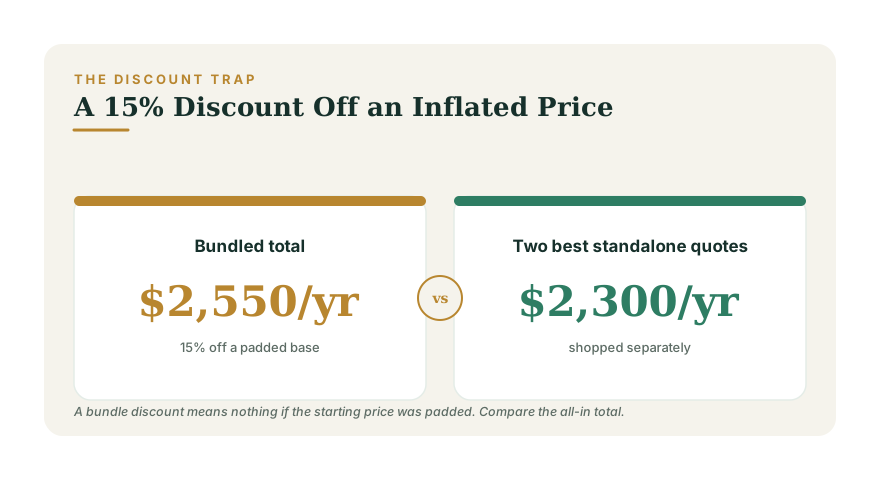
Suppose your bundled quote looks like this: a home policy of 1,800 dollars and an auto policy of 1,200 dollars, totaling 3,000 dollars, with a 15% bundle discount bringing you to 2,550 dollars a year. That feels good. But you shop it out and find:
- A different insurer's standalone home policy for 1,400 dollars.
- A third insurer's standalone auto policy for 900 dollars.
Your separate total is 2,300 dollars, which is 250 dollars a year cheaper than the bundle, for the same coverage. Over ten years that is 2,500 dollars, and that assumes the bundle's renewal increases stay tame, which the loyalty penalty suggests they often do not. The bundle was not a scam in the legal sense, but the "discount" framing steered you away from the cheaper option.
How to protect yourself
- Always get standalone quotes too. Price each policy separately from several insurers, then compare that total against the bundle. The discount headline is irrelevant; only the final number matters.
- Compare identical coverage. Match the dwelling coverage, liability limits, deductibles, and endorsements line by line, or you are comparing different products.
- Re-shop every one to two years. This is the single best defense against the loyalty penalty. Insurers count on you never checking.
- Watch the renewal, not just the first year. An attractive introductory bundle can creep upward at renewal. Track your premium year over year.
- Use an independent agent or a few direct quotes. An independent broker can quote multiple carriers; a captive agent can only sell you their own company's bundle.
When bundling genuinely wins
Bundling is not always a trap. Sometimes it really is the cheapest option, and it has real convenience benefits: one bill, one renewal date, one company to call after a storm that damages both your house and your car. For some drivers, bundling also unlocks accident forgiveness or smoother claims handling. The point is not to refuse bundles, it is to refuse to assume the bundle is cheapest. Verify it with standalone quotes, and if the bundle truly wins on the all-in number, take it with confidence.
The honest recommendation
Treat the word "discount" as marketing and the all-in annual total as truth. Get standalone quotes for home and auto from a handful of insurers, compare apples to apples on coverage, and only then decide whether the bundle actually beats buying separately. Then re-shop every year or two so a quiet loyalty penalty does not erase whatever you saved.
Re-shopping your home and auto is one of the highest-return hours of admin you can do all year. When you have your real all-in numbers, plug the savings into the tools, double-check your coverage choices with the insurance calculator, and see how redirecting that money strengthens your overall scores.