Studying in the United States on an F-1 visa is exciting, but the financial system can feel like a maze. You arrive with no credit, tight work restrictions, and a tax situation that differs from your American classmates. Getting the basics right early saves money and, more importantly, protects your visa status.
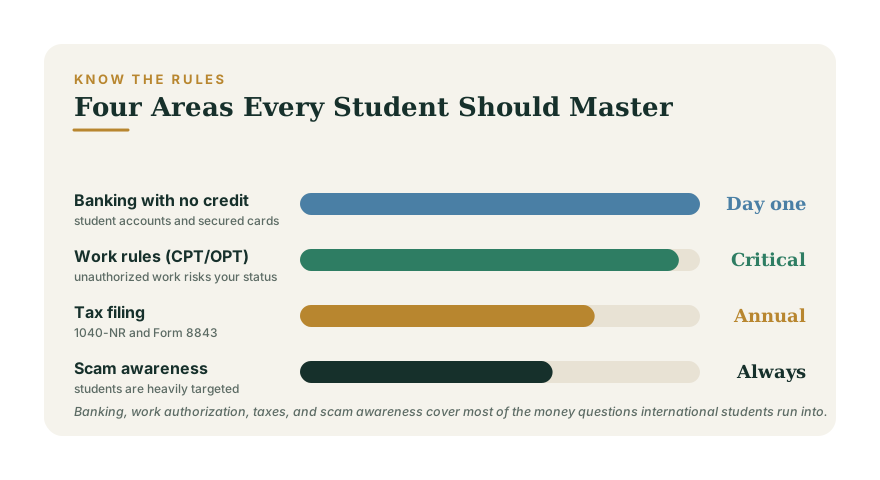
Banking When You Have No Credit
Open a US checking and savings account soon after you arrive. Many banks offer student accounts with no monthly fee and no minimum balance. You will not qualify for most credit cards at first, so a secured card or a student card designed for newcomers is usually the best way to start building a credit history. Use it lightly and pay it in full each month.
Work Rules: The Stakes Are High
Work authorization is the area where mistakes can end your studies. The general framework looks like this, but always confirm details with your school's international student office before you act:
- On-campus work. F-1 students may generally work on campus up to about 20 hours per week while school is in session.
- CPT (Curricular Practical Training). Off-campus work that is part of your program, authorized before you start.
- OPT (Optional Practical Training). Up to roughly 12 months of work in your field, with a possible extension for many STEM graduates. You must apply and receive an Employment Authorization Document before working.
Working without authorization, even informally, can be treated as a status violation. When in doubt, do not work and ask your designated school official first.
The FICA Exemption
Here is a benefit many students miss: nonresident F-1 students are generally exempt from Social Security and Medicare (FICA) taxes on wages from authorized work, typically for their first five calendar years in the US. If an employer withholds FICA by mistake, you can usually request a refund. This is separate from income tax, which you still owe.
Taxes: Forms You Cannot Skip
Most international students are nonresident aliens for tax purposes in their early years and file Form 1040-NR rather than the standard 1040. Even if you earned no US income at all, you generally must file Form 8843 to document your presence and visa category. If you did earn income, you may also need to file a state return. Tax treaties between the US and your home country can reduce or eliminate tax on certain income, so check whether one applies to you. Many universities provide free tax software designed for nonresidents.
Scams That Target Students
International students are a favorite target for fraud, partly because newcomers may not know how US agencies actually operate. Watch for these red flags:
- Fake government calls claiming you owe back taxes or have a visa problem, demanding immediate payment by gift card or wire. The IRS and USCIS do not work this way.
- Job offers that ask you to deposit a check and forward part of the money — a classic money-mule scheme.
- Apartment listings that require a deposit before you can see the unit.
Build Habits That Last
Even on a student budget, you can open accounts thoughtfully, start a credit file, and keep clean tax records. Those habits make the eventual jump to OPT and, for many, an H-1B far smoother. Run a quick check of where you stand with our free tools and read more in our library.