Your landlord's insurance covers the building, not your stuff and not your liability. If a fire, theft, or burst pipe wipes out your belongings, you are on your own unless you carry renters insurance. The good news is that it is one of the best values in all of insurance.
What it actually covers
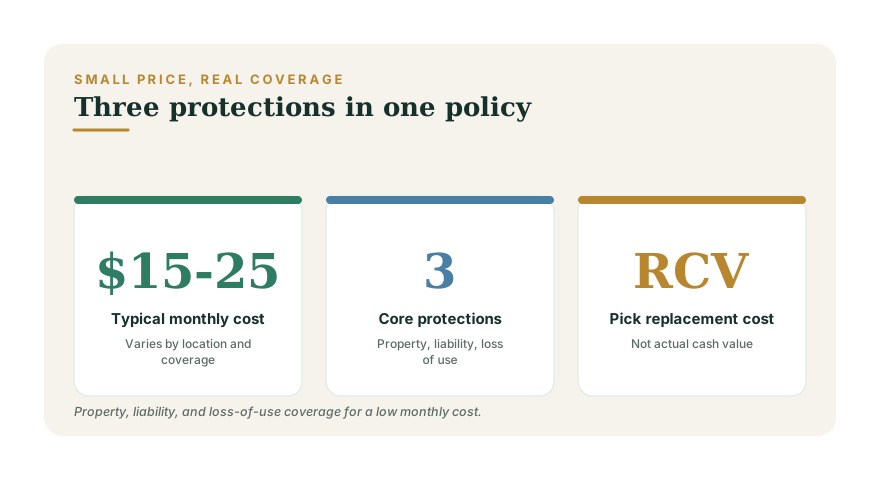
A standard renters policy bundles three protections that would each be expensive to replace out of pocket:
- Personal property — your furniture, electronics, clothing, and other belongings, whether lost to fire, theft, vandalism, or certain water damage.
- Liability — legal and medical costs if someone is injured in your unit or you accidentally damage someone else's property.
- Loss of use — hotel and extra living costs if your home becomes uninhabitable and you have to live elsewhere while it is repaired.
Actual cash value vs replacement cost
This single choice determines how much you actually receive after a claim. Actual cash value pays what your items are worth today, after years of depreciation, so a five-year-old laptop might pay out a fraction of what a new one costs. Replacement cost pays what it takes to buy a new equivalent. Replacement-cost coverage costs slightly more in premium and is almost always worth it; depreciation can gut an actual-cash-value settlement just when you need the money.
What it does not cover
Renters insurance has real gaps you should know before you assume you are protected:
- Floods — flood damage requires a separate flood policy, full stop.
- Earthquakes — usually excluded and sold as an add-on or separate policy.
- High-value items — jewelry, art, and collectibles often have low sub-limits unless you schedule them separately.
- Roommates' property — your policy generally covers only you and listed household members.
How cheap it really is
Renters insurance typically costs roughly fifteen to twenty-five dollars a month, often less, depending on where you live and how much coverage you buy. For that, you protect thousands of dollars of belongings and shield yourself from a liability claim that could otherwise reach your savings. Many landlords now require it, and bundling it with your auto policy usually trims the price further.
How to buy smart
Take a quick video inventory of your belongings so you can prove what you owned if you ever file a claim. Choose replacement-cost coverage, set a deductible you can comfortably pay, and add riders for any high-value items. Then make sure your liability limit is high enough; if your assets are growing, you may want to pair it with broader coverage as described in umbrella insurance explained. To see how renters coverage fits your overall protection, run the insurance calculator.