Sending money to family abroad is one of the most common and most emotionally important financial acts immigrants perform. It is also one of the most quietly overcharged. Providers compete loudly on fees while making their real money somewhere harder to see: the exchange rate.
Understanding this single point — that the fee is often the smaller cost — can save you a meaningful amount over a year of regular transfers.
The Two Costs of Every Transfer
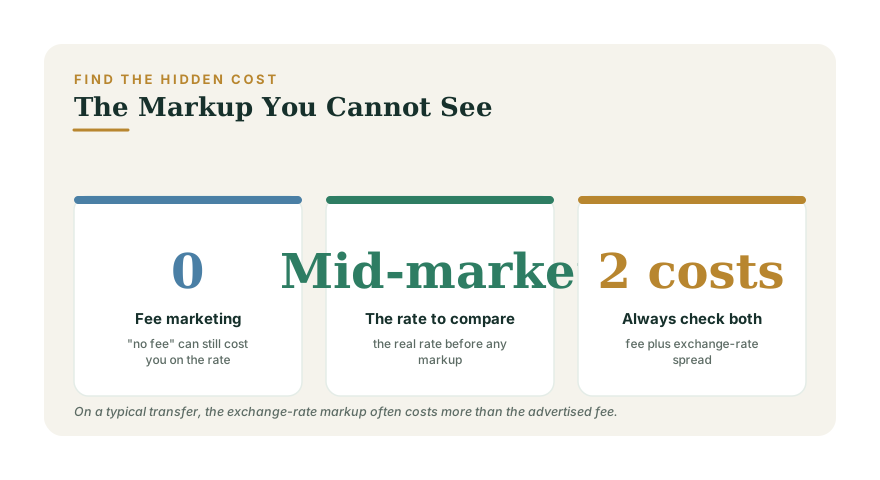
Every remittance has two costs. The first is the upfront fee, which is easy to see. The second is the exchange-rate markup, the gap between the real "mid-market" rate (the one you see on a search engine or financial site) and the rate the provider actually gives you. A service that advertises "zero fees" may bake a large markup into the rate, making it more expensive than a competitor that charges a small visible fee but uses a near-honest rate.
To compare fairly, always ask the same question: how many units of the destination currency will my recipient actually receive? That single number captures both costs at once.
Your Main Options
- Specialist transfer apps. Many digital money-transfer services offer rates close to the mid-market rate with low, transparent fees. For routine transfers, these are often the cheapest option.
- Banks. Convenient if you already bank there, but bank wires frequently carry both a flat fee and a wide exchange-rate spread, plus possible intermediary bank charges.
- Traditional money-transfer agents. Useful for cash pickup in places where recipients lack bank accounts, but rates and fees vary widely.
Watch for Hidden Charges
Beyond the fee and the rate, a few other costs can creep in:
- Intermediary bank fees on international wires, which can be deducted along the way.
- Receiving fees charged by the recipient's bank or agent.
- Card funding fees if you pay with a credit card instead of a bank transfer.
Timing and Amounts
Exchange rates move daily. If you send a large amount and the timing is flexible, even a small rate improvement matters. Some services let you lock a rate or set an alert. Sending one larger transfer rather than several small ones can also reduce the total you pay in flat fees, though you should weigh that against your family's actual needs.
Tax and Gift Considerations
For most people, sending your own after-tax money to family abroad is not itself a taxable event in the US. However, very large gifts can trigger reporting requirements, and receiving large foreign gifts has its own US rules. If you are moving substantial sums, or sending money tied to business or property, check whether any reporting applies and consider a cross-border tax professional. Keeping clear records of what you sent and why is always wise.
Build a Simple Routine
Pick two or three providers, compare the amount received on a sample transfer, and re-check every several months since pricing changes. A few minutes of comparison can put noticeably more money into your family's hands. Sharpen the rest of your money habits with our free tools.