Children absorb money attitudes long before any classroom covers the subject, mostly by watching the adults around them. Research on financial habits suggests many are set by early adolescence. The encouraging part is that you do not need a finance degree to teach the basics; you need age-appropriate lessons and a willingness to let kids make small mistakes while the stakes are low.
The most powerful lesson is the one you are not trying to teach: how you yourself handle money. Kids notice whether you plan, save, and discuss spending calmly. Modeling beats lecturing every time.
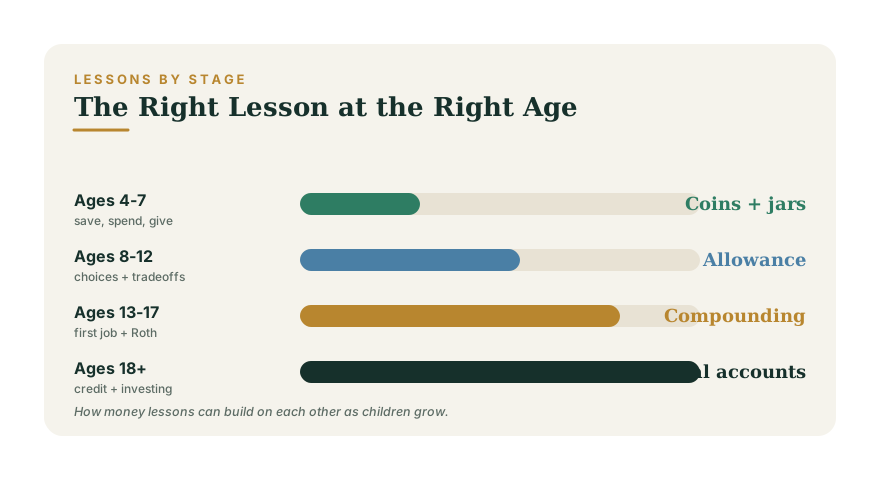
Ages 4 to 7: the basics of value
Young children learn that money is finite and must be earned. Use physical coins and bills so the concept is concrete. The classic three-jar system works well: one jar to save, one to spend, and one to give. Let them buy a small toy and feel both the joy and the fact that the money is now gone. That tradeoff is the whole lesson.
Ages 8 to 12: choices and tradeoffs
This is the age for an allowance, whether tied to chores or simply given as a teaching tool. The point is to let kids manage a small, regular sum and live with the consequences. If they blow it all on day one, resist bailing them out; the disappointment is the curriculum. Introduce delayed gratification by offering to match savings toward a bigger goal, and start showing how prices compare so they learn to shop deliberately.
Ages 13 to 17: the magic of compounding
Teenagers can grasp the single most important idea in personal finance: money grows on itself over time. Run a simple demonstration. Show that a small sum invested now becomes far larger in decades than the same sum invested later, because earnings generate their own earnings. The mechanics are laid out in compound-interest-explained. When a teen gets a first job, this is the moment to open a custodial Roth IRA funded by their earned income; even modest contributions at this age have enormous runway.
- Pair the first paycheck with a quick lesson on taxes and take-home pay.
- Let them experience a debit card and a budgeting app so digital money still feels real.
- Discuss the difference between wants and needs using their own spending.
The accounts that build wealth
Two vehicles matter most for kids. A custodial brokerage or custodial Roth IRA lets a working teen start investing decades early. A 529 plan is the standard tax-advantaged way to save for college, with tax-free growth when used for education; the details are in 529-plans-explained. Even small, automatic contributions to these accounts, started young, do most of the heavy lifting through sheer time in the market. Build the plan together at /plan.