Life insurance has one job: replace the money your death would take away from people who count on you. If no one depends on your income, you probably do not need it. If people do, term life is almost always the right tool, and it costs far less than the products agents push hardest.
Who actually needs it
You need life insurance when someone would suffer financially if your income stopped: a spouse, children, aging parents you support, or a co-signer on a large debt. Single people with no dependents and enough assets to cover their own final expenses usually do not. Stay-at-home parents are an underrated case; replacing the childcare and household work they provide can cost a great deal.
How much: the DIME method
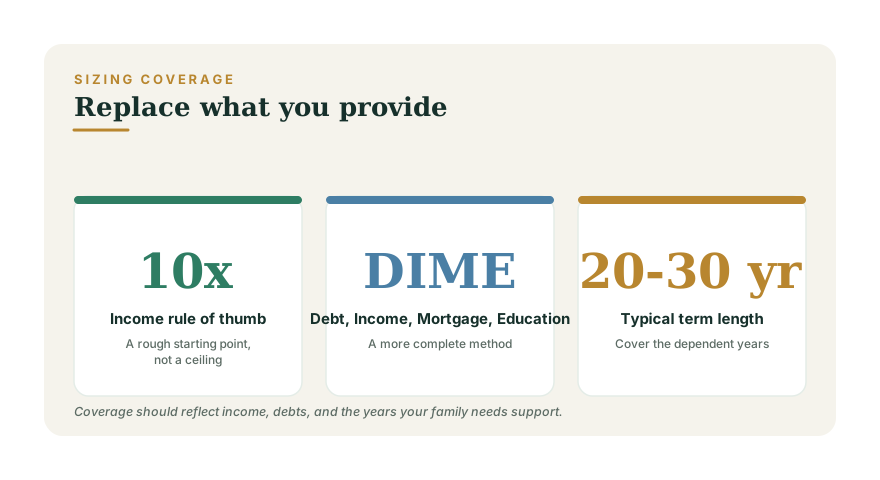
A common rule of thumb is ten times your income, which is fine as a starting point but ignores your specifics. The DIME method is more honest because it adds up what your family would actually need:
- Debt — credit cards, car loans, and other balances someone would inherit or have to cover.
- Income — your annual income times the number of years your family needs replacement.
- Mortgage — enough to pay off or keep up the home.
- Education — projected costs of educating your children.
Add those, subtract savings and existing coverage, and you have a defensible number rather than a guess.
Choosing the term and laddering
Term length should roughly match how long others depend on you. A parent with young kids and a new mortgage might want 30 years; someone a decade from an empty nest and a paid-off house might need only 15. Many people overbuy length because they fear renewing later at higher rates.
Laddering solves the over-buy problem. Instead of one large 30-year policy, you stack a few level-term policies of different lengths and amounts. Coverage is high while obligations are high, then steps down as debts shrink and kids leave, so you stop paying for protection you no longer need.
Why term, not whole life
Permanent policies bundle insurance with a savings account wrapped in high fees and commissions. For the same monthly cost, term buys vastly more death benefit, which is the whole point in your high-need years. The "investment" inside whole life almost always underperforms simply investing the difference yourself. We dismantle the pitch in the permanent life insurance scam.
How to buy
Buy level term, where the premium stays fixed for the whole term, from a financially strong insurer. Shop multiple quotes; pricing varies for identical coverage. Be honest on the application, because misstatements can void a claim. Lock it in while you are young and healthy, since rates only rise with age. To estimate your number before you shop, use the insurance calculator.