Your auto and home policies include liability coverage, but only up to a limit, often a few hundred thousand dollars. A serious accident, a guest injured on your property, or a teenage driver at fault can blow past that ceiling in a single judgment. Umbrella insurance is the inexpensive layer that catches the overflow.
What it covers
An umbrella policy provides additional liability protection above the limits of your underlying auto and home or renters policies. It typically also covers some claims those policies exclude, such as libel, slander, or false imprisonment. What it covers:
- Bodily injury you cause to others beyond your auto or home limits.
- Property damage claims that exceed your base coverage.
- Legal defense costs, which can be enormous even if you ultimately win.
- Certain personal-liability claims not covered elsewhere.
It does not cover your own injuries, your own property, or business liabilities, and it requires you to carry underlying coverage at a minimum level first.
Who needs it
The simplest test is whether you have assets a lawsuit could reach. If a judgment exceeds your liability limits, the plaintiff can pursue your savings, investments, home equity, and even future wages. People who should strongly consider umbrella coverage include homeowners, anyone with meaningful savings, parents of teen drivers, owners of pools or trampolines, dog owners, landlords, and people with a public profile. The more you have built, the more an unprotected gap can cost.
How much to buy
A common guideline is to carry umbrella coverage at least equal to your net worth, and ideally a bit more to account for future earnings a court could garnish. Most people start at one million dollars and add layers as their assets grow. Because the marginal cost of each additional million falls, buying more is often cheaper than expected.
What it costs
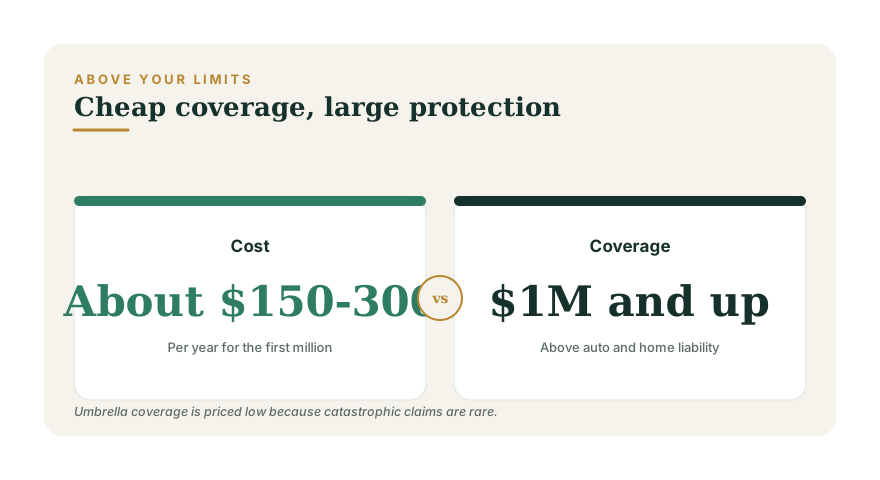
Umbrella insurance is remarkably affordable. The first million typically runs roughly a few hundred dollars a year, and each additional million usually adds a smaller amount. The reason is simple: large claims are rare, so insurers can price broad protection cheaply. Insurers will usually require you to raise your auto and home liability limits to a set minimum before they sell you an umbrella, which slightly raises those premiums.
How to buy it
Buy your umbrella from the same insurer that holds your auto and home policies whenever possible, since coordinating the underlying limits is simpler and bundling can lower cost. Confirm the required underlying limits, then verify the umbrella sits cleanly on top with no gap between them. While you are reviewing limits, it is a good moment to revisit your base deductibles in how to choose your home insurance deductible.