Bank fees rarely arrive as one big shock. They drip out a little at a time, a maintenance charge here, an overdraft there, an out-of-network ATM withdrawal on vacation, and over a year they can quietly add up to a meaningful sum. Worse, most of them are avoidable once you know what to look for.
Treating these fees as fixed is a mistake. They are a cost of how you bank, not a cost of banking itself, and you can usually engineer them down to zero.
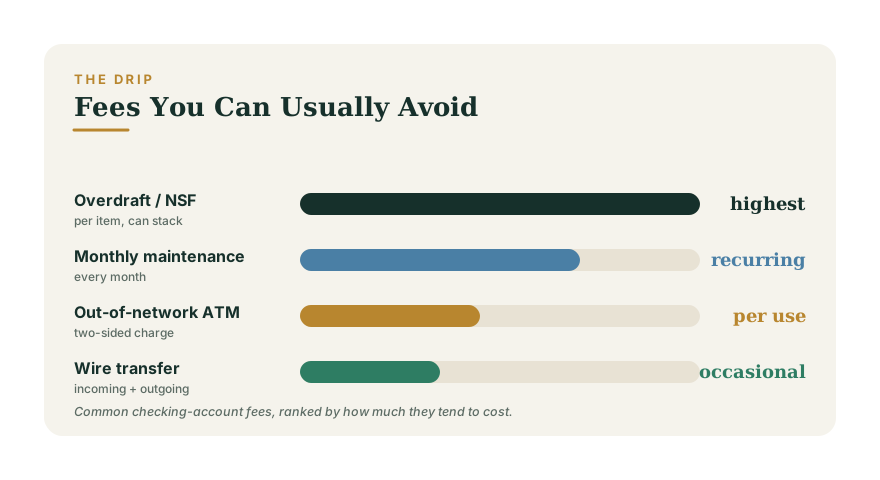
The big ones: overdraft and NSF
Overdraft and non-sufficient-funds (NSF) fees are the most painful because they hit when you are already short on cash, and several can stack in a single day. An overdraft fee applies when the bank covers a transaction that exceeds your balance; an NSF fee applies when it declines one. To avoid them:
- Opt out of overdraft coverage on debit-card purchases so transactions are simply declined instead of approved with a fee.
- Link a savings account or line of credit for cheaper or free overdraft protection.
- Set low-balance alerts so you are warned before you slip below zero.
- Choose a bank that has eliminated or capped these fees, which many now have.
Monthly maintenance fees
Many checking accounts charge a recurring monthly fee that is waived if you meet conditions: a minimum balance, a direct deposit, or a set number of transactions. Read your account's fee schedule and either meet the waiver condition or switch to an account with no monthly fee at all. There is no reason to pay rent on a checking account when fee-free options are common.
ATM and out-of-network fees
Using an ATM outside your bank's network often triggers two charges: one from your bank and one from the ATM owner. Avoid them by:
- Sticking to in-network ATMs or large surcharge-free networks.
- Getting cash back at a store checkout instead.
- Choosing a bank that reimburses out-of-network ATM fees, which some online banks do.
Minimum-balance and wire fees
Some accounts charge a fee if your balance dips below a threshold. If you cannot reliably keep that balance, the account is the wrong fit. Wire transfers, both incoming and outgoing, can carry meaningful fees; for non-urgent transfers, a free ACH transfer usually does the same job in a day or two. Foreign-transaction and paper-statement fees are smaller but equally avoidable.
Better alternatives
If your current bank nickel-and-dimes you, you have options:
- Online banks often have no monthly fees, low or no minimums, and ATM-fee reimbursement, thanks to lower overhead.
- Credit unions are member-owned nonprofits that tend to charge fewer and lower fees and offer better service.
- Fee-free national accounts exist at large banks too, if you ask for the right product.
Spend twenty minutes reading your bank's fee schedule and another twenty comparing one alternative. The savings are pure margin, and they recur every month. Fold the result into your spending plan with /tools.