If the word bankruptcy makes you feel ashamed, that feeling was installed in you on purpose, mostly by the lenders who profit when you keep paying instead of getting relief. Bankruptcy is not a personal failure. It is a legal process written into federal law specifically so that people who are buried can get a fresh start. It exists because a functioning economy needs a release valve, and using it is exactly what it is there for. This is general education, not legal advice, but the first useful thing to know is that almost everything you have heard about bankruptcy is wrong.
The honest truth: it is a reset, not a life sentence
The two common consumer paths are Chapter 7 and Chapter 13, and they do very different things.
- Chapter 7 (liquidation). This wipes out most unsecured debts, often within a few months. You have to pass a means test based on income, and in theory non-exempt property can be sold to pay creditors, but exemptions protect a lot of everyday assets, so most filers actually keep their basic belongings. It is fast and it ends with a clean slate on the discharged debts.
- Chapter 13 (reorganization). This sets up a court-approved repayment plan, usually three to five years, where you pay back some portion of what you owe on a schedule you can afford. It is used by people with steady income who want to keep assets like a house they are behind on. At the end, remaining eligible balances are discharged.
Follow the money: who benefits from the shame
Lenders spend a lot of energy making bankruptcy feel unthinkable, because a borrower who feels too ashamed to file is a borrower who keeps making payments, keeps paying interest, and keeps absorbing late fees long past the point of hopelessness. The longer you struggle alone, the more they collect. The collections industry, debt settlement firms, and some credit counseling outfits all have a financial interest in you choosing almost anything other than the legal remedy that would actually stop the bleeding. The stigma is not an accident. It is a profitable product.
What actually gets wiped, and what does not
Bankruptcy is powerful, but it is not a magic eraser. Knowing the limits matters.
- Typically discharged: credit card debt, medical bills, personal loans, most unsecured debts, and many old utility and collection accounts. These are the debts that crush most households, and they are exactly what bankruptcy is best at clearing.
- Usually not discharged: most student loans (absent a hard-to-meet hardship showing), recent income taxes, child support and alimony, court fines and criminal penalties, and debts from fraud. If your main problem is student loans, bankruptcy is usually the wrong tool.
- Secured debt is different: if you want to keep a car or house, you generally have to keep paying for it. Bankruptcy can stop a foreclosure or repossession temporarily and reorganize the catch-up, but it does not let you keep the asset for free.
The math of recovery
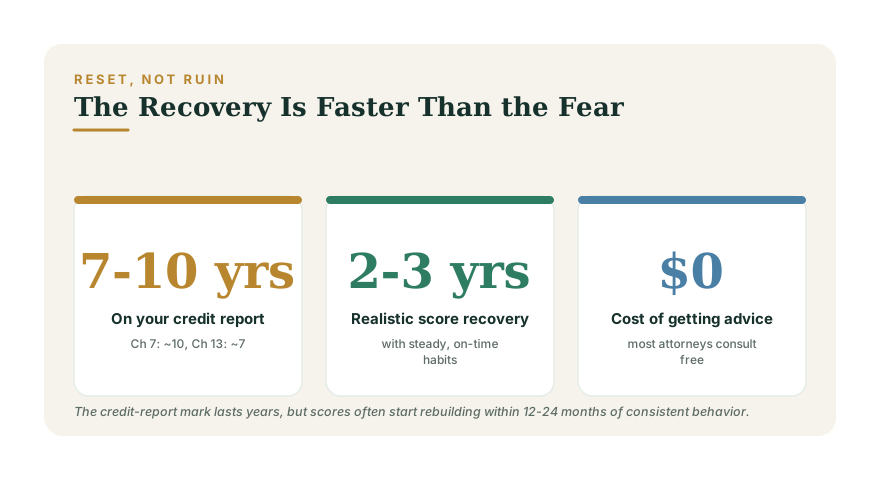
Here is the number that surprises people. A Chapter 7 filing stays on your credit report for about ten years, and a Chapter 13 for about seven. That sounds devastating, but the report is not the same as your score, and the two move on very different timelines. Your score is driven mostly by recent behavior. Once your debts are discharged, your debt-to-income ratio improves overnight, and if you start using a secured card responsibly and paying every bill on time, scores commonly begin climbing within 12 to 24 months. Many filers reach the mid-600s or higher within two to three years, well before the report mark disappears.
Compare that to the alternative. Someone who avoids bankruptcy and instead spends five years missing payments, defaulting, and getting sued racks up a continuous stream of fresh negative marks the entire time, with a score that never recovers because the damage keeps renewing. Counterintuitively, filing can put you on the road to a better score faster than slowly drowning does, because it stops the new damage and lets the clock start.
How to think about it: a decision checklist
- Be honest about the size of the hole. If you could realistically clear your unsecured debt in three to five years with a workable plan, you may not need bankruptcy. If the math never works no matter how you run it, stop punishing yourself and consider it.
- Identify what your debt actually is. Bankruptcy helps most with credit cards, medical bills, and personal loans. It helps little with student loans or recent taxes.
- Talk to a bankruptcy attorney before deciding anything. Most offer a free consultation. They can tell you in one meeting whether you even qualify and which chapter fits.
- Beware of anyone selling you an alternative to bankruptcy for a fee. Debt settlement firms in particular often leave you worse off than the legal process would.
- Do not let shame make the decision. Inaction is itself a choice, and it is usually the most expensive one.
The honest recommendation
If you are genuinely drowning and the numbers will not work no matter how you arrange them, the worst thing you can do is nothing. Talk to a bankruptcy attorney before another year of late fees and collection calls grinds you down. Bankruptcy will not solve every kind of debt, and it is not free of consequences, but for the right situation it is the fastest legal route back to stable ground, and it was built for exactly this.
This article is education, not legal advice, so get a professional opinion on your specific situation. In the meantime, map out where you actually stand in your plan, see what your numbers look like with the tools, and read our realistic recovery roadmap in the articles. Whatever you decide, decide it with clear eyes instead of shame.