Debt consolidation is sold as a fresh start: roll your scattered balances into one loan with one payment, and breathe easier. Sometimes it genuinely helps. But the pitch almost always leads with the same number, the new monthly payment, and that number is the easiest one in all of personal finance to game. A lender can shrink your payment any time they like simply by stretching the loan over more years. The payment goes down, you feel relief, and the total amount you hand over before you are free can quietly go up.
The honest truth: a lower payment is not a lower cost
There are only two ways to lower a loan payment: cut the interest rate, or extend the term. A real rate cut helps you. Extending the term just spreads the same debt over more months, and every extra month is another month of interest. The monthly number shrinks, which feels like winning, but you are paying interest for longer, so the total can grow even when the rate falls. The payment is what they advertise. The total interest is what you actually pay. They are not the same thing, and the gap between them is where the trap lives.
Follow the money
Consolidation is a product, and the people selling it are paid when you buy. A new loan often carries an origination fee, commonly 1% to 8% of the amount borrowed, taken right off the top. A balance-transfer card charges a transfer fee, typically 3% to 5%, and the tempting 0% rate is a teaser that expires, often snapping to 20% or more on whatever is left. Lenders make their money on the interest you pay over time, so a longer term is good business for them. And there is a quieter cost: the moment your cards show a zero balance, the credit limits are still open, and a painful share of people run the cards back up and end up owing on both the new loan and the old cards. That outcome is not a glitch. It is, statistically, the most common way consolidation goes wrong.
Now the math
Take a 10,000 dollar balance and compare two honest scenarios.
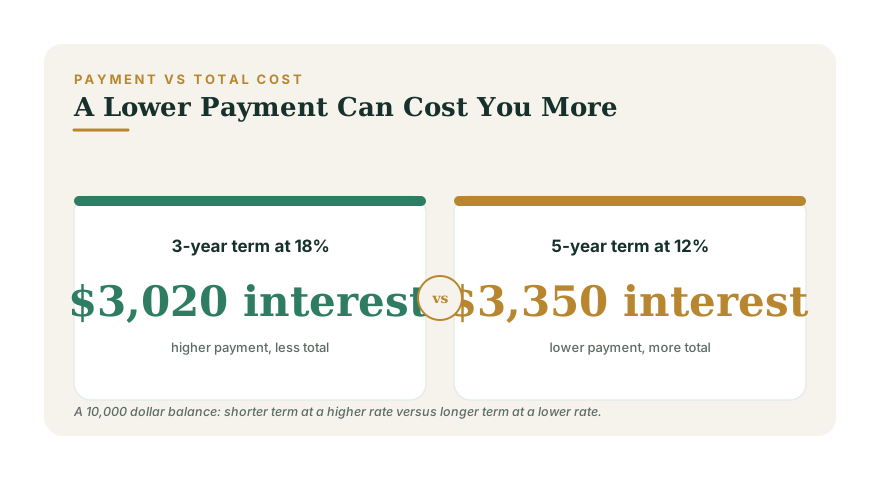
- Keep it on a card at 18% and pay it off in 3 years. The payment is about 362 dollars a month, and you pay roughly 3,020 dollars in total interest.
- Consolidate to a 12% personal loan, but stretch it to 5 years. The payment drops to about 222 dollars a month, which looks like a huge win. But you pay roughly 3,350 dollars in total interest.
The "lower rate" loan cost you about 330 dollars more, even though the interest rate fell by a third. The lower payment was an illusion created entirely by adding two years. Now add a 5% origination fee on the 10,000 dollar loan, another 500 dollars, and the longer loan is roughly 830 dollars worse than just paying the higher-rate card off faster. The rate went down and the cost went up, because the term went up more.
Flip it around and you can see when consolidation truly works. Take that same 10,000 dollars, get the 12% rate, and keep the same 3-year term you would have used on the card. Now the payment is about 332 dollars and the total interest is roughly 1,950 dollars, a real saving of more than a thousand dollars versus the card. Same loan, same rate. The only thing that changed is that you refused to extend the term. That single decision is the whole game.
How to protect yourself
You can keep the good version of consolidation and skip the trap by ignoring the payment and looking at the numbers the seller hopes you will not.
- Compare total interest over the life of the loan, not the monthly payment. Make the lender show you the full cost in dollars.
- Insist that the new rate is genuinely lower, and that the new term is no longer than your current realistic payoff timeline.
- Add every fee, origination and transfer, into the comparison. A lower rate eaten by a fat fee is not a saving.
- Read the fine print on teaser rates: when the 0% ends, what rate replaces it, and whether deferred interest applies retroactively.
- Have a hard rule that the paid-off cards get put away or closed, so you do not re-run the balances. Consolidation without that rule is a loan that doubles your debt.
The honest recommendation
Consolidate only when both things are true: the rate is actually lower after fees, and you commit to the same or shorter payoff term while you stop adding new debt. Under those conditions it can save you real money and simplify your life. The moment a pitch leans on the smaller monthly payment instead of the smaller total cost, treat it as a marketing trick, because that is what it is. The goal was never a comfortable payment. The goal is to be out of debt for less money, sooner.
Before you sign anything, do the arithmetic yourself: compare the total interest of staying put against the consolidated loan, fees included, and map a realistic payoff date in your plan. The tools can help you run the numbers, and the articles cover which payoff order saves the most. Lower the cost, not just the payment.