Some expenses are not emergencies, and they are not surprises either. You know the holidays arrive every December, your car needs tires eventually, and the dog will visit the vet. Yet these costs still blow up budgets, because they do not arrive monthly. They arrive in lumps, and a monthly budget that ignores them is quietly fragile. A sinking fund is the simple fix.
What a sinking fund is
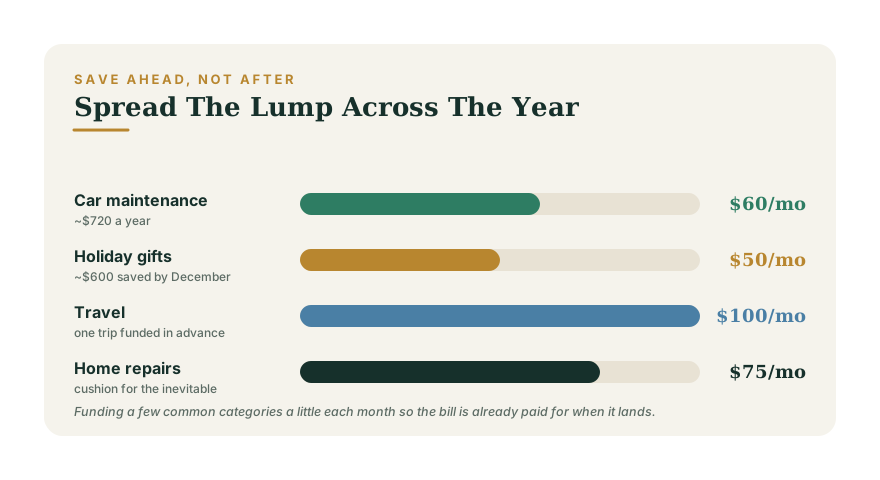
A sinking fund is money you set aside gradually for a known, irregular expense, so the money is already there when the bill comes due. Instead of getting hit with a 720-dollar set of tires in one month and scrambling, you save roughly 60 dollars a month all year and pay for them out of a fund that was waiting. The term comes from the old corporate practice of setting aside money over time to retire a future debt, but the household version is just deliberate saving for predictable lumps.
The mental shift is the whole point. You stop treating these costs as shocks and start treating them as monthly line items that happen to be paid out occasionally. The expense was always coming; the sinking fund just makes you feel it as a steady trickle instead of a flood.
How a sinking fund differs from an emergency fund
People conflate the two, but they do opposite jobs. An emergency fund is for the unknown and the unwelcome: a job loss, a medical event, a genuine crisis you did not plan for. You hope to never touch it, and you keep it untouched precisely so it is there when life goes sideways.
A sinking fund is for the known and the expected. You fully intend to spend it, on a specific category, on a roughly predictable schedule. Raiding your emergency fund for holiday gifts defeats its purpose; that is exactly what a gift sinking fund prevents. Think of the emergency fund as insurance and the sinking funds as scheduled prepayments. You want both, and keeping them separate stops one from cannibalizing the other.
Categories worth a sinking fund
You do not need a fund for everything. Pick the lumpy costs that historically catch you off guard. Common ones include:
- Car costs: maintenance, tires, registration, and the repair you cannot predict the date of but can predict the existence of.
- Gifts and holidays: birthdays, weddings, and the December spending spike that surprises people every single year.
- Travel: the annual trip, flights home, or a vacation you would otherwise put on a card.
- Home and renters: repairs, appliance replacement, and seasonal upkeep.
- Annual or quarterly bills: insurance premiums, property taxes, subscriptions billed yearly, and professional dues.
The monthly funding math
The calculation is refreshingly simple: estimate the annual cost of a category, then divide by twelve. If you spend about 600 dollars on gifts each year, you save 50 dollars a month and arrive at December already funded. If car upkeep runs roughly 720 dollars a year, that is 60 dollars a month. Total up every category, and you get a single monthly number that, once it is in your budget, makes the lumps disappear.
If a target is closer than twelve months away, divide by the months remaining instead. A trip eight months out at 1,200 dollars needs 150 dollars a month. The honest part of this exercise is that adding up all your irregular costs often reveals you have been spending far more than you realized, just invisibly, because it never appeared as a line item.
Where to keep the money
Sinking funds should be easy to reach but separate from your everyday spending, so the balances do not blur into one number you mentally spend twice. A few sensible setups:
- A high-yield savings account with named sub-accounts or buckets, one per category, so each balance is visible at a glance.
- A single savings account tracked by category in your budgeting app or a spreadsheet, if your bank does not offer buckets.
- The old envelope method, with physical cash, for those who prefer to literally see the money pile up.
Keep it liquid. These are funds you plan to spend within a year or two, so chasing returns matters less than being able to withdraw the moment the bill arrives without penalty.
Why it works when willpower does not
The reason sinking funds succeed is that they remove the decision from the stressful moment. When the transmission fails, you are not choosing between a credit card and a panic; you are simply spending money that was already labeled for exactly this. That turns a budget-wrecking event into a non-event, and over time it is one of the cleanest ways to stop relying on debt for things you genuinely saw coming.
Start with the two or three categories that hurt you most, build them into your monthly plan, and let the rest come later. To see how these steady set-asides fit alongside your other goals, walk through your numbers on the plan.