Credit card interest is one of the largest wealth transfers in everyday American life, and almost nobody sees it happening. It does not fall on everyone with a card. It falls hard on a specific group, and it flows quietly toward the banks and toward the people who never pay a cent of it.
If you have ever paid interest, this is not a lecture. The system is built to make carrying a balance feel normal and easy. Understanding exactly how it works is the first step to stepping out of it for good.
The Honest Truth: Interest Is Concentrated
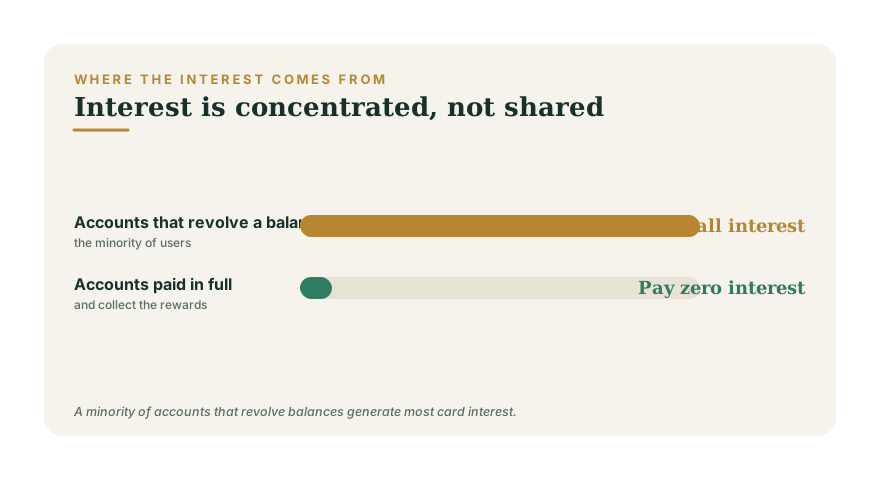
Most people assume credit card interest is a broad tax on cardholders. It is not. The accounts that revolve a balance, meaning they do not pay the full statement each month, generate the overwhelming majority of all the interest banks collect. A large share of cardholders pay in full and never pay a dime of interest in their lives.
This creates two completely different experiences of the same product. For the pay-in-full user, a credit card is a free spending tool that pays them rewards. For the balance-carrier, it is a high-cost loan that compounds against them. Same card, same bank, opposite outcomes.
Follow the Money
Here is the uncomfortable mechanism. Rewards are funded mostly from merchant interchange fees, but the richest part of card profit is interest from revolving balances. The bank uses generous rewards to attract heavy spenders, knowing a reliable fraction will end up carrying a balance.
The result is a transfer. The interest paid by balance-carriers helps fund the rewards enjoyed by pay-in-full users, and it delivers the bank its biggest profit line. People who can least afford it are effectively subsidizing the cash back and travel points of people who can. It is not framed that way in any advertisement, but that is the economic reality of the rewards card industry.
Why It Is Not a Moral Failing
It is tempting to say balance-carriers should just pay it off. But people carry balances for understandable reasons: a medical bill, a job loss, a car repair, a stretch where income simply did not cover essentials. The minimum payment is deliberately set low enough to feel manageable while keeping you in interest for years. The system is engineered around human stress, not human laziness.
Consider the math of a minimum payment. On a 5,000 dollar balance at 22% APR, paying only the minimum can keep you in debt for well over a decade and cost thousands in interest, because most of each early payment goes to interest rather than principal. That is not a personal weakness. That is the product working as designed.
How to Never Pay Interest Again
Getting to the pay-in-full side is a sequence, not a single heroic act. The plan below works whether you are starting from a clean slate or digging out of a balance.
- Stop adding to the balance today. You cannot fill a bucket with a hole in it. Switch daily spending to a debit card or cash until the balance is gone.
- List your balances and APRs. Attack the highest APR first, the avalanche method, since that dollar of interest is the most expensive money you owe.
- Throw every spare dollar at the target balance while paying minimums on the rest. Each dollar paid on a 22% balance is a guaranteed 22% return.
- If you qualify, consider a balance transfer to a lower or zero introductory rate, but read the fine print and the transfer fee, and have a real payoff date before the promo ends.
- Once the balance hits zero, set autopay to the full statement balance. This is the single switch that moves you permanently to the pay-in-full side. From that day on, you collect rewards and pay no interest, ever.
The Payoff-Then-Autopay Plan
- Freeze new charges on the card until the balance is cleared.
- Pay down highest-APR debt first, minimums on the rest.
- Build a small starter emergency fund so the next surprise does not go back on the card.
- The day the balance is zero, switch autopay to full statement balance.
- Check statements monthly to confirm autopay covered the full amount.
Our Honest Recommendation
The line between the two experiences of a credit card is full-statement autopay. Everything before it is a high-interest loan. Everything after it is a free, rewards-paying tool. The goal is not to feel guilty about interest you have paid. It is to make this your last year of paying any. Clear the balance with the avalanche method, build a small buffer so emergencies do not reload the card, and then flip the autopay switch and never look back.
Map your payoff timeline with the calculators under tools, stress-test it at your plan, and if your balances feel overwhelming, the recovery steps in our articles can give you an order to work through. The banks count on this being confusing. It does not have to be.